
Welcome to the new RK Drums website. A new, faster experience. Your account was migrated, but you will have to reset your password. Click here.

RK Drums
How-To Guide

Cacao Nibs: Roasted vs Raw — What the Heat Changes


What the words mean

Worth pinning down first, because the labels are used loosely.

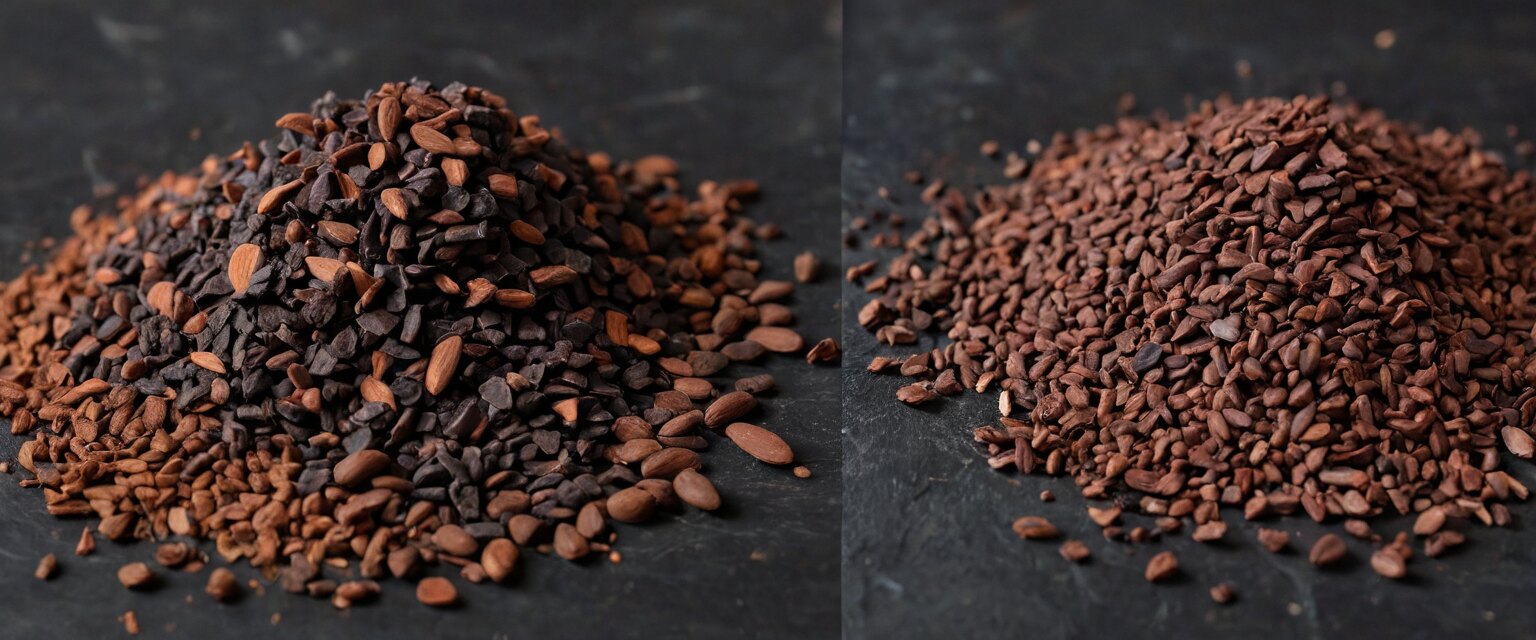
Roasted nibs come from beans that were roasted whole, then cracked and winnowed. The overwhelming majority of nibs sold are this.

Raw nibs come from beans that were cracked and winnowed without a roast, or after only gentle warming. Note that "raw" is doing a lot of work here — the beans were still fermented in the sun for days and dried on patios, sometimes reaching substantial temperatures. Raw means unroasted, not untouched.

We build roasting drums, so treat us as interested. But we have nothing to sell you in either nib, and the differences below are process facts rather than a case.

Flavour

This is the largest difference and the least surprising.

Raw nibs are sharper and more acidic, often noticeably astringent and bitter, with fruity or vinegary notes remaining from fermentation. Some origins are pleasant this way. Many are challenging.

Roasted nibs taste like chocolate. Heat drives reactions between sugars and amino acids that create aromatic compounds simply not present in the raw bean — this is where "that tastes like chocolate" actually comes from. Roasting also drives off some of the volatile acids produced during fermentation, which is why roasted nibs read as rounder and less sharp.

That last point matters: some of what roasting does is subtractive. It removes harshness as well as creating aroma.

Texture and behaviour

Raw nibs are tougher. They retain more moisture, and they are denser and more leathery to bite. Roasted nibs are drier and more brittle, which is why they have the clean snap people associate with a nib.

That difference has practical consequences downstream. Roasted nibs break down more readily in a melanger; raw nibs are harder work and take longer. If you are grinding, it is a real factor.

Storage

Roasted nibs are drier, and dryness is a large part of shelf stability — residual moisture is what invites problems. Raw nibs hold more of it and want more careful storage.

Against that, roasted nibs have had their aromatics developed, and developed aromatics dissipate. A roasted nib is at its best relatively soon after roasting and fades from there. Raw nibs are more stable in that specific sense, having less to lose.

The nutrition question

You will find strong claims that raw cacao retains nutrients roasting destroys, and equally strong claims that the difference is overstated.

We are not going to take a position. We build roasting equipment; we have no standing in nutrition and would rather say so than pretend. If that is your reason for choosing, research it from sources qualified to comment — not from a machine shop, and honestly not from anyone selling either nib.

What we can tell you is that the flavour, texture and processing differences above are real, measurable, and the same regardless of how the nutrition argument resolves.

If you are making chocolate

The practical position is well settled: roast the whole beans, then crack and winnow. You get the shell protecting the kernel during the roast, clean husk separation afterwards, developed flavour, and nib that grinds readily.

How far to take that roast — which origin wants what — is chocolate-maker territory rather than ours. What we can help with is the machine and the measurement: cacao gives no reliable audible cue, so bean temperature over time is the only instrument you have. See why bean temperature is everything and how long to roast cacao beans.

Common questions

What is the difference between raw and roasted cacao nibs?

Roasted nibs come from beans roasted whole then cracked and winnowed; raw nibs skip the roast. Roasted nibs taste like chocolate — heat creates aromatic compounds absent in the raw bean and drives off some fermentation acids — and they are drier, more brittle and easier to grind. Raw nibs are sharper, more acidic and astringent, and tougher.

Are raw cacao nibs actually raw?

Unroasted, not untouched. The beans were still fermented in the sun for several days and dried on patios, sometimes reaching substantial temperatures. "Raw" in this context means the beans did not go through a roast, not that they never got warm.

Do roasted or raw nibs grind better in a melanger?

Roasted. Roasting drives off moisture and leaves the nib drier and more brittle, so it breaks down more readily. Raw nibs retain more moisture and are denser and more leathery, which makes them harder work and slower to refine.

Are raw cacao nibs healthier than roasted?

We build roasting equipment and have no standing in nutrition, so we will not take a position — and we would suggest not taking one from anyone selling either nib. What we can say is that the flavour, texture, grinding and storage differences are real and measurable regardless of how that argument resolves.

Keep reading

Where the roast ends and chocolate begins

Everything above is roasting — heat, time, temperature, moisture, how a bean behaves in a turning drum. That is our trade, and we will talk about it all day.

What happens after the roast is a different craft, and not ours. For fermentation, origin selection, winnowing technique, refining, conching, tempering and recipes, go to Chocolate Alchemy — John Nanci has been the reference on craft chocolate since 2004. Their complete bean-to-bar guide, the Ask the Alchemist archive and the forum will take you further than we could, and they run an all-day drum roasting seminar worth the trip.

Get the roast right with us. Get the chocolate right with them.