
Welcome to the new RK Drums website. A new, faster experience. Your account was migrated, but you will have to reset your password. Click here.

RK Drums
How-To Guide

Malt Drum Roaster — Grain Roaster Machines, 2 to 12 LB


A grain roaster with the holes in the right size

Most small-batch grain roasting happens on a sheet pan, because the machine market never made anything for it. Coffee roasters are sold as coffee roasters, and the ones that would physically work are meshed for a bean four times the size of a barley corn.

An RK Drum is a rotisserie drum roaster that installs into a standard rotisserie gas grill — the grill you already own, with its own burner and its own motor mount. Solid 304 stainless, 16 gauge, TIG-welded throughout, no rivets, lifetime warranty on the drum. Every one is built to order in our shop rather than stamped to a single pattern, which is what makes the next part possible.

Mesh Hole Size — the grain-specific decision

This is the option that turns a drum roaster into a grain roaster, and it is the one thing on the order form that grain customers must get right. Every drum, 2 through 12 LB, ships with a Mesh Hole Size:

  • Solid — for ultra-fine grains & powders, such as granola & flour
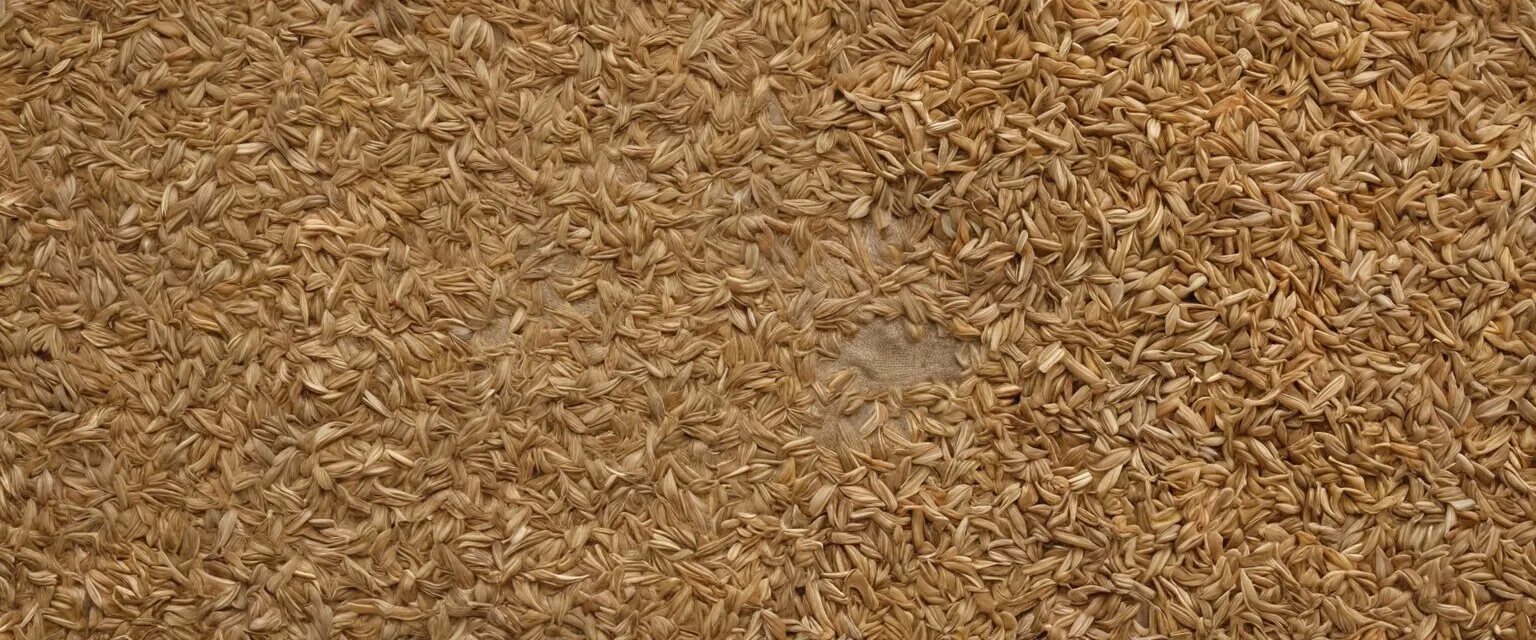
  • 1/16" — for small grains, such as quinoa & barley
  • 3/16" — for large grains, coffee, cacao, corn & nuts (this is the standard, and the one a coffee drum ships with)

The trade is straightforward. Larger holes move more air through the bed and shed more chaff, smoke and dust; smaller holes keep more product in the drum. Barley, wheat and quinoa belong on 1/16". Corn belongs on 3/16". If most of what you roast is fine or floury, Solid keeps every bit of it inside and you accept the reduced airflow in exchange.

Mesh is set when the drum is welded. It is not an accessory you swap later, so if you are between two, tell us what you actually roast most weeks and we will say which one we would build. There is more detail on the trade-offs on the mesh and hole size page.

Vanes — the internal ribs that lift and tumble the product — stay at the standard length for grain, the same as coffee. It is only nuts and cacao that need them cut shorter for clearance. So a grain drum and a coffee drum are the same object with different perforations, which is useful to know if you roast both.

Tell us the primary product you intend to roast when you order. If most of what you put through it arrives already cracked, flaked or hulled, say so — that changes the mesh answer more than the grain species does, because processed grain sheds far more fines than a whole kernel and carries far more air by volume.

Pick your size

SizeSuitsKit with RoastPilot
2 LBA 5-gallon homebrewer roasting speciality malt per batch 2 LB Everything Kit + RoastPilot
4 LBFrequent brewing, brew clubs, roasting ahead for several batches 4 LB Everything Kit + RoastPilot
6 LBNano-brewery scale, small distillery mash bills 6 LB Everything Kit + RoastPilot
8 LBSteady production, repeat commercial runs 8 LB Everything Kit + RoastPilot
12 LBVolume work, distillery-scale speciality grain 12 LB Everything Kit + RoastPilot

The gap between a homebrewer and a distiller here is real. A 5-gallon batch of beer might take half a pound to two pounds of speciality malt, so a 2 LB drum covers a brew day outright and a 4 LB drum lets you roast once and store. A distillery working a full mash bill needs the same product measured in tens of pounds, which is a 6, 8 or 12 LB conversation. We worked the sizing through properly on the batch sizes page, including why you should never load a drum to its rated number.

Already have a grill and a rotisserie motor? Buy the drum on its own or the controller on its own. Everything else lives in the shop.

RoastPilot — because grain is a temperature problem

Grain has no crack. Nothing in the roast tells you where you are except colour, and colour arrives late and through a lid. The RoastPilot controller kit reads product temperature from a thermocouple in the rotisserie handle, sends it live to your phone, and holds a target by working the gas for you.

For crystal and caramel malt that last part is not a convenience, it is the whole technique. Those malts are made by holding the grain in the 210–230°F range rather than passing through it, and holding a number for half an hour by hand on a gas valve is miserable work that you will do badly. For toasted and amber malts, where the common starting point is around 350°F for about thirty minutes, the saved curve is what lets the second batch match the first.

Cooling, at size

Grain leaves the drum hot and keeps developing while it sits. At two pounds a box fan and a colander stops the roast fast enough. From six pounds up, a Model R or Model F cooler stops being an accessory, because a deep pile of hot grain insulates itself and the middle of it carries on roasting for several minutes after you thought you were done. More on that in cooling roasted grain.

What this is not

Worth being plain about, because it saves everyone a disappointing email.

It is not a malting system. It does not steep, germinate or kiln green grain — it roasts grain that is already malted or already dry. It is not automatic: it holds a temperature you choose, it does not decide what temperature you should choose. It is not a continuous roaster; it works in batches, and between batches the drum needs to come back to a known starting temperature or your second run will not match your first. And it needs a rotisserie gas grill with a working motor, which is the thing that makes it affordable and also the thing that means you have to own one.

Roasting grain commercially, or want a drum built to a spec we have not listed? Email us — we build to customer specification, and mesh questions are the ones we most like getting before an order rather than after.

Common questions

Which mesh hole size should I order for barley or wheat?

1/16 inch. It is specified for small grains such as quinoa and barley, and it keeps whole kernels and most of the fines inside the drum while still moving air through the bed. Order 3/16 inch only if the bulk of your roasting is corn, coffee, cacao or nuts, and Solid if you are working with flour-fine product or granola.

Can one drum roast grain and coffee?

Yes, and the vanes are identical for both. The variable is the mesh: a 3/16 inch drum handles coffee and corn but will lose small grain, while a 1/16 inch drum holds small grain and still roasts coffee perfectly well with slightly less airflow. If you roast both, 1/16 inch is usually the better compromise.

Does the drum come with the grill?

No. The drum mounts into a standard rotisserie gas grill you already own, using its burner and its rotisserie motor. That is deliberate — you are buying the roasting drum and the control system rather than paying again for a firebox and a frame you already have in the garden.

Is a 2 LB drum enough for a homebrewer?

For most 5-gallon brewers, yes. Speciality malt additions typically run from half a pound to a couple of pounds per batch, so a 2 LB drum covers a brew day in one run. Step up to 4 LB if you would rather roast a larger quantity once and store it, or if you brew often enough that roasting per batch becomes a chore.

Can I change the mesh size later?

No. The mesh is part of the drum wall and is welded at build time, so it is a decision that lasts the life of the drum. Tell us what you roast most often before you order and we will tell you which one we would build for that.

Keep reading

Where the roast ends

We build roasters. What you do with the grain afterwards — mashing, brewing, distilling, baking, blending a grain bill — is its own craft and a deep one, and it is not ours. Unlike coffee, there is no single authority we can hand you to: brewing knowledge lives in forums and clubs rather than with one gatekeeper.

That gap is why we wrote these pages. Ask us about drums, mesh sizes, grills, burners, motors, thermocouples, batch sizes, or why half your barley came out two shades darker than the rest, and you have our full attention.