
Yes, you can, and it is the right place to start
Plenty of good chocolate has been made from oven-roasted cacao. If you are finding out whether you enjoy this, use the oven you already own — spending money before you know is the actual mistake.
We build drum roasters, so you can guess where this page ends up. But we would rather give you a genuinely useful oven method than pretend the oven is useless, because it is not.
How to get the most out of an oven roast
- Preheat properly and give it longer than the beep. Ovens announce temperature when the air reaches it, while the mass of the oven is still catching up. Ten or fifteen extra minutes gives you a far more stable roast.
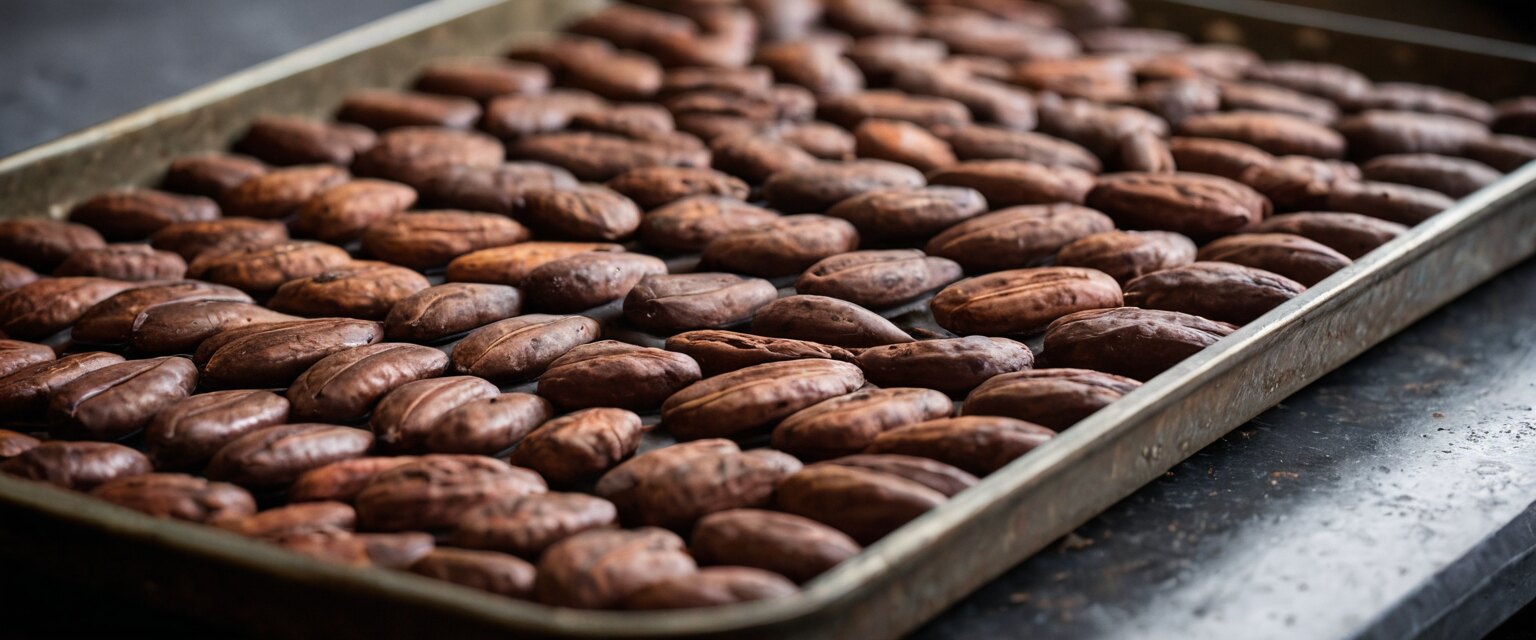
- Use a single layer on a perforated tray. Beans piled two or three deep roast at different rates by depth, and you will not be able to tell by looking.
- Stir every few minutes. This is the oven's fundamental weakness — beans do not move. Stirring is you doing manually what a drum does continuously. Be systematic rather than vigorous; you are redistributing, not tossing.
- Start moderate rather than hot. The reflex is to crank it to drive the roast, but a high air temperature scorches the outside of a bean whose middle is still wet. The first phase of any cacao roast is about getting moisture out.
- Get a probe in if you possibly can. Even an oven thermometer sitting in the bean bed tells you more than the dial does. The dial reports air; you want beans.
- Cool immediately and hard. Cacao is 45–55% cocoa butter and carries enough heat to keep roasting on the tray. Get it onto a cool surface with a fan on it the moment it comes out — a colander and a box fan is fine. Skipping this undoes whatever precision you managed.
- Write it down. Temperature, time, weight, and what it tasted like as chocolate. Without notes you are not learning, you are just repeating.