
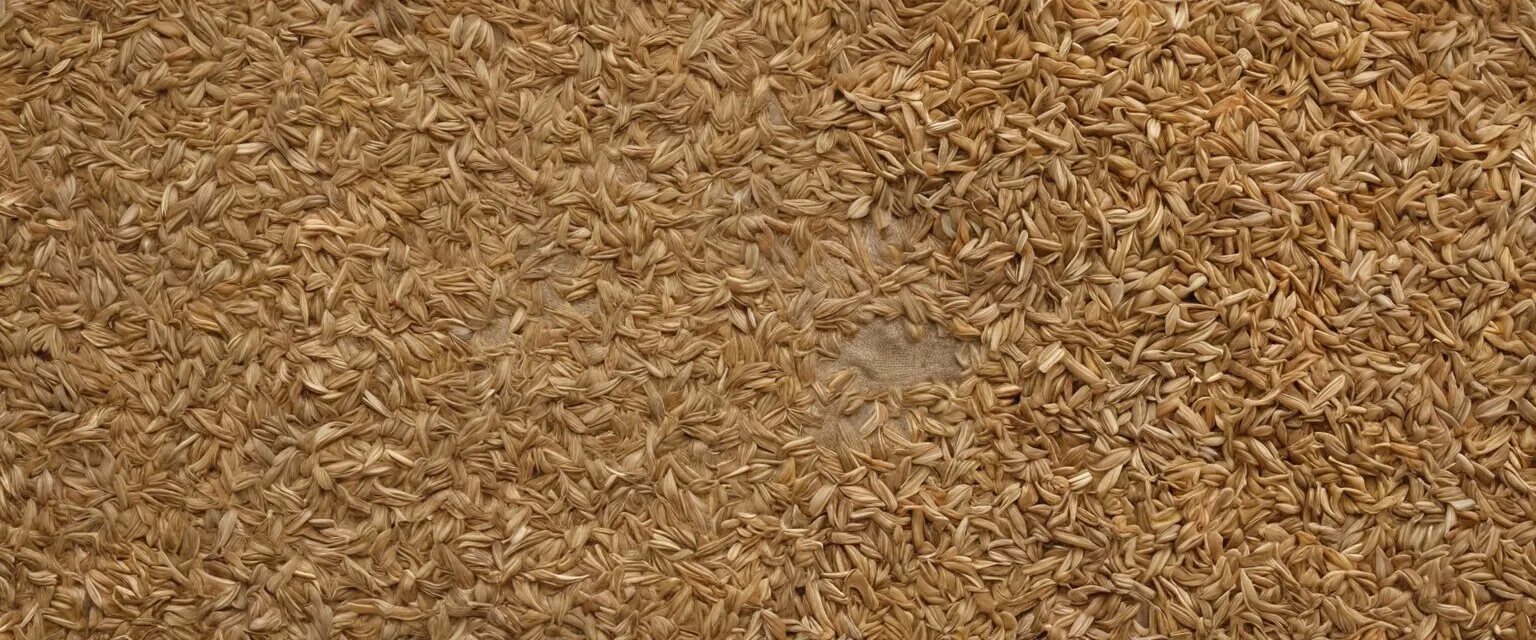
Half the barley went through the drum
It is one of the most common ways a first grain roast goes wrong, and it is entirely mechanical. Someone buys a drum roaster, loads it with barley or quinoa, starts the motor, and watches a steady trickle of grain fall out of the perforations and onto the burner. By the time they stop it they have lost a chunk of the batch, filled the grill with smouldering kernels, and learned something about hole size the expensive way.
Nothing was defective. A drum built for coffee is perforated for coffee. Coffee beans are large enough that a 3/16" hole holds them comfortably while letting air, smoke and chaff move through the bed. Put something smaller in the same drum and the same holes stop being ventilation and start being a sieve.
So mesh hole size is not a detail on the spec sheet. For grain it is the first decision, ahead of capacity, ahead of controller, ahead of everything except whether the drum fits your grill.
What ships on every RK drum
Mesh Hole Size is a selectable option on every drum we build, at every capacity from 2 LB through 4, 6, 8 and 12 LB. There are three:
- Solid — for ultra-fine grains & powders, such as granola & flour
- 1/16" — for small grains, such as quinoa & barley
- 3/16" — for large grains, coffee, cacao, corn & nuts
3/16" is the standard, because coffee is what most drums get used for. If your roasting is going to be grain, the standard is very often the wrong answer.
The rule: sort by the smallest particle, not the average
This is the whole decision in one line, and it is the part people get wrong even when they are thinking about hole size at all.
You are not choosing for the grain as it is described on the sack. You are choosing for the smallest thing that will actually be in the drum. A sack of barley is not uniform. It contains broken kernels, a fraction of thin and undersized grain, dust and fines that settled to the bottom during transport, and whatever bits of husk came along. Malted grain that has been handled a few times contains more of all of that. The average kernel might sit happily on a 3/16" perforation while the bottom ten percent of the size distribution pours straight through.
The practical test is easy: take a handful from the bottom of the sack, not the top, and see what fits through the hole. If anything does, that fraction of your batch is going into the fire, and it is the fraction most likely to scorch and smoke on the way there.
The same rule applies to anything you intend to roast that arrives already broken or cracked. Cracked corn is not corn for this purpose. Grist is not malt. Size the mesh for what is in the drum on the day.